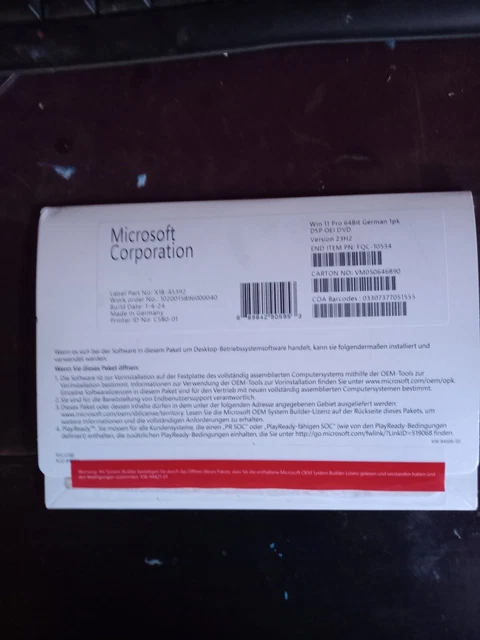
A Guide To Choosing The Best Windows 11 License: Home Oem, Pro, Or Retail
The world of PC software licensing has changed dramatically since the era of Windows 7. The simple purchase of a boxed product has been replaced by a maze of options such as OEM vs. Retail, Home vs. Subscriptions and perpetual keys are available. It can be a bit confusing for those who use it, and more so those who manage systems for others, to navigate terms like windows lizenz acquisition or windows oem. This guide will help you navigate the jargon and provides 10 essential tips to assist you in your purchase (windows11 purchase) or ongoing system maintenance. We’ll link these choices to other choices related to servers access software, productivity suites, and software to protect your data.
1. Understanding the shift in the licensing paradigm: The “Windows 7 Hangover”.
When you upgrade from Windows 7, your first shock is likely to be the licensing model. Windows 7 primarily used retail, perpetual licensing with clear transfer rights. Windows 11 licensing today is far more complicated and is tied to Microsoft accounts. The Windows Home key or pro key that you purchase today isn’t on a disc; it’s a digital licence tied to your hardware and/or your account. When you purchase a Windows lizenz, it’s usually purchasing a product to activate your digital entitlement. Understanding OEM vs. the rules for retail transfers is now essential.
2. OEM Licenses – The bargain that comes with an ongoing price tag
It’s the most well-known and least expensive option for a license. But it is also an agreement that is conditional. It’s advertised as “for system builders” and will be permanently linked to the motherboard it is activated on. If you upgrade your computer regularly or intend to change the operating system, this product is not the right choice for you. Microsoft doesn’t directly support OEM licences. This is because the manufacturer or seller of the PC has to take care of the issue. Keys for Windows 11 that appear to be priced too low are most likely OEM keys that are not of a certain origin. They could violate license terms or may be deactivated.
3. Retail Licenses Your Insurance Policy to Hardware Evolution
If you purchase an original Retail windows lizenz you have transferability and Microsoft direct support. The license is able to be cancelled on one machine and moved to another, provided it’s only in use on one device at one time. You can only choose this option if you need an unaffected license regardless of hardware. Retail licenses can be beneficial for those who are looking to ensure that their PC is up-to-date or IT departments who require flexibility.
4. Home vs. Pro Control is more crucial than features.
Windows 11 Home aggressively controlling the user: it forces automatic reboots and updates, shows more advertisements and offers, and does not have tools like the Local Group Policy Editor. Windows 11 Home controls the user aggressively. It enforces automatic reboots and updates, displays more advertisements and offers but lacks tools like Local Group Policy Editor, and forces users to allow advertisements. You can regain control over your PC with Pro. It allows you to delay updates for weeks, fully personalize your experience, and even block “consumer-friendly” intrusions. If you require security, autonomy and predictability of your PC, the Pro version is right for you.
5. The CAL Conundrum What is the reason? your Windows 11 License is Just the Entry Fee.
If you connect to the business network on a Windows 2025 with your computer, it’s not enough. Legally, you must have a Client Access License (CAL) for each device or user accessing servers’ resources. Windows 11 Pro doesn’t include an access license for clients (CAL). Cals are an additional expense that is often ignored. Windows 11 Home is not licensed to be used in commercial settings. This includes any technical workarounds. When planning budgets for servers-based networks make sure you include the cost of CALs.
6. Security Software Synergy: OS Choice Dictates Your Needs.
Windows licensing determines the security of your system. Windows 11 Pro may have built-in protection tools, such as BitLocker or a more powerful Defender which reduces the requirement for third-party suites. If you’re looking for home or require more protection, a suite, like “norton 360” or kaspersky Premium, will make up the gap. Crucially, running such suites on Pro lets you disable their redundant features (like simple disk encryption) to limit the impact on performance. Security software and your OS should be part of a coordinated strategy rather than two distinct purchases.
7. Mirror of Office License: Your Windows Decision is mirrored by the Office Parallel License.
The options for an “office purchase” directly mirror Windows. Microsoft 365 is a subscription based product that allows customers to move their licenses. The office-lizenz needs to be compatible with your Windows principles. Microsoft 365 offers the same freedom if you buy an Windows Retail License that is transferable. If you consider a PC as a sealed device (OEM mentality), a perpetual Office edition might be enough.
8. The “Kaufen” Caveat: Geographic Pricing and Grey Market Risk.
It is common to find that the cost of windows11 and windows11 lizenz is very different. This is due to regional pricing, and the gray market. Microsoft could have stopped dealers from distributing keys to regions that are not expensive. These keys may be revoked. Genuine purchases, OEM and Retail, originate from authorized retailers or distributors in your region. The cheapest key can be the most costly mistake. It could result in a system being deactivated and the loss of data.
9. Windows Server 2025: Integration Path to Future-proof Windows Server Pro.
Planning for future expansion? Windows Server 2025 requires Windows 11 Pro, Enterprise or Professional on client devices to allow for centralized management. Windows 11 Home PCs will not be able to join a domain. Making the investment in Pro licenses even for a tiny configuration, will provide an easy on-ramp to a managed server environment when you need it. It will prevent a cost-intensive and disruptive migration from Home to Pro when your first server is deployed.
10. License Harmony – Building a Cohesive Estate for Software.
Your final objective should be to achieve the harmony of your licenses. A well-integrated setup could include: Windows 11 Pro Retail licenses (for control and transferability) + Users-only Microsoft 365 Business Premium subscriptions (for Office, cloud services and device management) and Enterprise-grade security (like `kaspersky premium` managed via an online console). This creates an auditable and user-focused software estate. A gray-market Windows 11 OEM key mixed with a standalone Office lizenz and an individual Norton 360 could result in a patchwork that is difficult to manage that could compromise compliance and compromises security. Don’t think of only individual purchases, but rather the entire ecosystem. View the top windows 11 oem for website advice including windows server 2019, windows office, windows office, windows server 2016, office 365 office key, office 2019 professional plus, ms office 2016, office 365 key, microsoft office 2019, key 365 office and more.
Knowing Windows Server 2025 Client Licenses For Businesses
The introduction of Windows server 2025 represents an important leap for expanding businesses, moving them from a network of peer-to-peer devices to a centrally managed IT infrastructure. But the most frequent and costly misunderstanding in this transition lies not in the server software and the often overlooked requirement for Client Access Licenses, also known as cals. They’re the legal and technical foundation for the Microsoft server ecosystem. Failing to properly license client access can derail an IT project, result in serious compliance penalties in an audit, and result in an interdependent chain that impact everything from your operating system for your desktop choices to security and productivity software. This guide will help you understand the ten crucial interconnected concepts that every company should be aware of when planning for Windows Server 2025, illustrating how licensing for servers affects your entire desktop environment’s structure and legality.
1. The Server License Is Just the Entry Fee.
It is possible to run the Windows Server 2025 application on either a physical computer or a virtual one. It is important to note that this license does not give users or devices the right of connection. The CALs can be used to buy this right in a separate transaction. It’s like renting a stage and venue at the concert. You will need a CAL ticket for each and every person (User Cal) or device(Device CAL) regardless of whether they are listening to the concert or seated at the back.
2. CALs and Desktop OS Licensing: A pair that can be separated.
It is not legal to use a CAL for clients running an unlicensed OS. If you purchase grey market windows 11 oem keys for business computers through a discount store such as windows11 lizenz, it is counterproductive and useless to purchase CALs that are legitimate. Microsoft’s licensing requirements require that the OS running on the client be licensed properly. An audit will first invalidate the desktop licenses, making the CALs–and potentially the server access itself–non-compliant. Your entire stack from your desktop to your server, needs to be in good order.
3. The Choice Between the CAL of the Device and User modeling Workforce.
It is also a decision that could have financial implications. A User License allows one person to access any of their devices, including laptops, desktops and tablet to connect to the server. A Device CAL grants the use of a certain device (e.g. workstations shared across factory floors) for any number of users. The most cost-effective choice is based on your usage patterns. User CALs become more efficient when mobile workers use several devices. Device CALs are cheaper in the event that shift workers share a few terminals. It is important to model your usage; mixing different types is allowed but complicates managing.
4. Windows 11 Home Technically and legally incompatible.
Windows 11 Home does not permit a computer to join an Active Directory traditional domain. This function is part of Windows Server. Even if technical workarounds were used to bypass the restriction, it would be in direct violation of the licensing. To prevent this, all client devices that require authentication or other services (such the file share, print queues and print queues, etc.).) must be running Windows 11 Pro, Education, Enterprise and Enterprise editions. Windows 11 Pro Enterprise, Education, or Education Editions must be installed on a Windows Server 2025. This makes buying a windows 11 home key` for any machine used in business not a viable investment if there is a future server deployment an option.
5. The Security Management Nexus: Server, Cals, and Endpoint Security.
When Windows Server is properly configured with CALs, Group Policy is a way to centrally deploy security policies. It will reduce the cost and hassle of maintaining the standalone security program. To prevent having to manually configure Kaspersky Premium or Norton 360 on every 50 devices, the policies are able to push configurations that are consistent from the server. The server functions as the backbone of management and makes your endpoint security investment more effective and less labor-intensive. The CAL is a license that enables managed connections.
6. Office License Synergy for a Server Environment
Your users will likely have access to documents that are shared by your Windows 2025 server. Microsoft 365 or a perpetual Office license (office lizenz) will affect your choice. Microsoft 365 Business Premium/Enterprise comes with Azure AD that can sync up with your Active Directory on-premise, as well as Intune, for device management. This creates a new hybrid identity model that simplifies secure access to both the on-premise resource (Server 2025) and cloud services (Microsoft 365). The subscription offers an easy integration process compared to standalone perpetual licenses.
7. The “External Connector” License Alternative for Public Access.
CALs apply only to only internal users. You cannot use CALs to give outside users access to your server (e.g. users who access a web-based portal that is hosted on your server, or users of FTP who are anonymous). Windows Server External Connector (EC) A licence for the Windows Server External Connector, is what you need to purchase. It’s a licence that attaches to the server and allows unlimited access for non-authentic external users. This distinction can prevent a massive compliance violation when deploying public-facing services.
8. The CALs that are used are exclusive to a specific version, however, they can be upgraded.
You can purchase CALs for a specific server version (e.g., Windows Server 2025 CALs). These CALs can be used to connect to servers running the version in question or any prior version. The 2025 CAL permits access to servers operating in 2025, 2020 or 2019. However, they won’t work in the next versions. You’ll need to buy CALs in order to use “Windows Server 2029” when you upgrade. It is important to include this in your IT budgeting.
9. Virtualization, CALs, and the “Every Access Rules”
In a virtualized environment the requirement for CALs applies, but is dependent on access, not the actual virtual machine. If 50 users will be using a file-sharing service which is running on a Windows Server 2025 instance, then you’ll need 50 User licenses (or sufficient Device Licenses to protect their devices). The number of server virtual machines that you have running doesn’t directly increase the number of CALs needed but rather the number of users that access these virtual machines. This stops you from over-buying for more complex virtual configurations.
10. The actual cost of ownership TCO is much more than just the sticker price.
The business case to adopt Windows server 2025must contain the entire licensing stack: the server’s license as well as the CALs that are required for all devices/users, and the required upgrade of all PCs used by clients to Windows 11 Pro (if not already). The comparison of cloud alternatives (such as moving file shares to SharePoint and using Azure Active Directory) requires you to calculate the initial capital cost (CapEx) as well as the ongoing costs of running physical servers. For small to mid-sized enterprises cloud-based subscription models cloud-based services is more affordable than the combined cost of server hardware, `windows server 2025` licensing, `cals`, and the compulsory Windows 11 Pro upgrades for the entire fleet. This choice is economically and architecturally driven, not only technical. See the top rated norton 360 for website examples including key 365 office, office 2019 professional plus, microsoft project, office key, ms visio software, office key, ms office 2016, microsoft visio software, microsoft project, ms project and more.